
If you’re hunting for the best horror games on steam, you’ve got more legitimately terrifying options than ever before. The platform’s horror catalog has exploded over the past few years, offering everything from classic survival horror experiences that defined the genre to innovative indie titles that’ll mess with your head in ways triple-A developers never imagined. Whether you’re after jump scares, psychological mind games, or atmospheric dread that builds over hours, Steam’s got something ready to shake your nerves. This guide cuts through the noise and delivers 15 genuinely great horror games worth your time, not the forgettable cash grabs that plague the store, but titles with staying power and the kind of reputation that spreads through gaming communities. Ready to get your adrenaline pumping?
Key Takeaways
- Steam’s horror games catalog offers diverse experiences beyond jump scares, including survival horror, psychological terror, and atmospheric dread for every scare threshold.
- Survival horror classics like Resident Evil 7, Amnesia: The Dark Descent, and Dead Space combine resource scarcity with strategic gameplay to create genuine tension and immersion.
- Psychological horror games such as Outlast and SOMA prioritize defenselessness and existential dread over combat, making isolation and vulnerability the primary source of fear.
- Co-op horror titles like Phasmophobia, Devour, and The Forest amplify panic through multiplayer chaos, where friend coordination and shared screams create lasting memories.
- Maximize your horror gaming experience by investing in quality audio setup, playing in darkness, minimizing distractions, and choosing between solo immersion or co-op camaraderie based on your preferences.
Survival Horror Classics That Defined the Genre
Survival horror games laid the foundation for everything scary in gaming, and these titles showcase why the formula still works a decade later.
Resident Evil 7: Biohazard
Resident Evil 7: Biohazard shifted the franchise from action-heavy spectacle back to genuine horror when it dropped in January 2017, and it’s aged remarkably well on Steam. The first-person perspective puts you in vulnerable Ethan Winters’ shoes as he navigates the decrepit Baker family mansion, constantly scrounging for ammo and healing items while puzzling out doors and grotesque family dynamics. The game nails that classic survival horror balance: you’re never overpowered, resources feel precious, and the Baker family encounters deliver legitimate tension. The VR version ($29.99) is an entirely different beast of psychological torment if you’re brave enough. Current player reviews hover around 8.3/10 on community platforms, with most praising the deliberate pacing and atmosphere. The standard edition runs perfectly on Steam Deck if you’re into portable horror.
Amnesia: The Dark Descent
Amnesia: The Dark Descent remains the gold standard for games that terrify you without giving you weapons to fight back. Released in 2010 and still rock-solid on modern systems, this game pioneered the “unarmed protagonist” approach that spawned a thousand imitators. You play as Daniel, wandering through a decaying castle with fragmented memories, pursued by an invisible water-dwelling entity that kills you instantly if spotted. The genius is in the restraint, the game rarely shows you the threat directly, instead building horror through sound design, the player’s imagination, and the physics engine creaking with unsettling noises. A complete playthrough takes 5–7 hours, making it perfect for one long horror session. The community still modifies this game heavily, so if you want to replay it with custom maps, there’s endless replay value.
Dead Space
Dead Space arrived in 2008 as survival horror’s answer to claustrophobic sci-fi, and the remake launched on Steam in 2023 to critical acclaim. Playing as engineer Isaac Clarke aboard a derelict mining starship overrun by mutated necromorphs, you’re genuinely isolated, no reinforcements coming, minimal ammo, and hostile alien abominations that require strategic dismemberment to take down. The sound design is brutally effective: the ship groans, enemies screech through vents, and your suit’s warning systems create constant ambient dread. You’ll spend roughly 10–12 hours carving through this nightmare, and every resource decision matters. The 2023 remake delivers faithful gameplay with modern visuals that make the gore genuinely uncomfortable to watch. Dead Space remains the definitive sci-fi horror experience.
Psychological Horror Games for Maximum Tension
Psychological horror strips away monsters and gore, replacing them with disorientation, paranoia, and the suffocating sense that something’s deeply, fundamentally wrong.
Outlast
Outlast launched in 2013 and redefined how horror games handle defenselessness. You’re investigative journalist Miles Upshur with nothing but a camcorder and your legs, infiltrating an asylum teeming with violent inmates and experimental abominations. The first-person perspective combined with limited resources (your camcorder needs batteries, your stamina runs out, hiding spots are scarce) creates relentless tension. This isn’t a game where you engage enemies, it’s pure evasion. What makes Outlast special is how it commits to making you feel hunted. The sound design rivals Amnesia, and the asylum’s architecture creates natural bottlenecks where encounters feel genuinely unavoidable. Roughly 5–6 hours for a complete playthrough, with DLC adding another 2 hours if you want more. Recent player data shows it maintains an 8.2/10 rating with consistent “legitimately terrifying” feedback.
SOMA
SOMA (2015) approaches horror from a philosophical angle, asking unsettling existential questions while you navigate an underwater research facility full of grotesque mutations. The premise sounds wild, you’re trapped in a base where AI has become conscious and horrifyingly self-aware, but the game treats it with intelligence. Developer Frictional Games (same team behind Amnesia) builds dread through isolation, eerie audio logs, and encounters with creatures that force uncomfortable moral decisions. The game deliberately offers a way to disable monster encounters if you want pure story experience, acknowledging that horror affects everyone differently. SOMA runs 8–10 hours and explores themes about consciousness and identity that linger after the credits roll. It’s less about jump scares and more about existential dread.
What Remains of Edith Finch
What Remains of Edith Finch doesn’t sound like horror until you play it, it’s technically a walking simulator, but calling it that undersells its emotional devastation. You’re exploring a sprawling family home, unraveling the story of the Finch family through environmental storytelling and first-person perspective exploration. The horror emerges gradually: family members disappearing, cryptic notes, a house that feels haunted not by ghosts but by absence. Some sections are genuinely disturbing (a particular bathtub sequence will make you uncomfortable), while others are heartbreaking. It’s only about 2 hours long, but it delivers more psychological impact than games ten times its length. Players consistently describe it as “devastating” and “unforgettable”, not scary in a jump-scare sense, but deeply, lingering uncomfortable.
Indie Horror Hidden Gems Worth Playing
Some of the most innovative horror on Steam comes from indie developers with shoestring budgets and unlimited creativity. These games prove you don’t need a studio backing you to make something genuinely unsettling.
Devour
Devour launched in early access in 2020 and refined into a solidly creepy 4-player co-op experience about exorcising a possessed woman while a demonic entity actively hunts your team. Each 20-minute mission is genuinely tense: you’re burning pages while the possessed woman becomes increasingly violent, your teammates might die, and failure means starting over. The co-op dynamic adds unpredictability, will your friend panic and run the wrong way? Will someone accidentally block an escape route? What sets Devour apart is how it scales threat based on performance: the better you do, the more aggressive the entity becomes. It’s pure adrenaline delivered in short bursts. Most players report 30–50 hours of playtime before they’ve exhausted the mission variety. At $7.99, it’s an absurd value for consistent co-op horror fun.
Phasmophobia
Phasmophobia is paranormal investigation wrapped in multiplayer chaos. Up to four players join a ghost-hunting crew armed with EMF meters, thermal cameras, and voice recognition software, exploring increasingly haunted locations while identifying ghost types. The innovation here is brilliant: ghosts respond to voice chat. Yell at your TV, and the ghost hears you. Sound is a literal game mechanic, not just atmosphere. Missions escalate from creepy to absolutely unhinged as the ghost manifests more aggressively. Single-player is supported, but multiplayer is where Phasmophobia shines, the panic when your friend’s character gets dragged into a dark room is genuinely hilarious and terrifying simultaneously. The developer releases regular content updates adding new ghost types and locations. Players report 50+ hours of value, and the community remains active. At $13.99, it’s already paid for itself through sheer playtime.
Grounded
Grounded flips the survival horror formula: you’re shrunken to ant-size in a suburban backyard where normal insects become nightmarish apex predators. Imagine Honey I Shrunk the Kids if it was genuinely terrifying. You’re crafting tools from twigs, hiding from spiders the size of dogs, and unraveling the mystery of your transformation through research stations and cryptic clues. The game released fully on August 27, 2024, after years in early access, and it’s surprisingly comprehensive. Spiders trigger genuine arachnophobia in players (the developers included extensive settings to reduce spider visibility), while the atmosphere of being tiny in a massive, predatory world creates constant dread. Solo or up to 4-player co-op, 15–25 hours depending on difficulty. It’s horror adjacent rather than pure horror, more tense and atmospheric than terrifying, but it’s built for long-term engagement.
Action-Packed Horror Experiences
Not every horror game makes you run and hide. These titles lean hard into combat, giving you weapons and the firepower to fight back, which paradoxically feels more satisfying than running from threats.
Evil Dead: The Game
Evil Dead: The Game (April 2022) takes the iconic horror franchise and turns it into a 4v1 asymmetrical multiplayer experience that’s pure fun. Four players control Ash and friends fighting off the Deadites while one player controls the Kandarian Demon, summoning creatures and possessing allies. It’s Resident Evil meets Friday the 13th, with Army of Darkness humor preventing it from wallowing in misery. Missions vary between straightforward “survive and escape” to objective-based chaos. The game nails the franchise’s tone, horror blended with absurdist comedy. Matches last 15–20 minutes, making it perfect for a quick horror session without massive time commitment. The multiplayer population remains stable, with queue times typically under 60 seconds. Bruce Campbell’s voicework as Ash is genuinely fantastic.
Back 4 Blood
Back 4 Blood (October 2021) channels Left 4 Dead’s formula with modern systems, delivering 4-player co-op zombie chaos across multiple campaigns. The game ditches Left 4 Dead’s simplicity for a card-based loadout system that adds strategic depth, you’re customizing your build between missions, choosing perks and modifiers that fundamentally change how you approach encounters. Campaign missions run 30–45 minutes each, and the game includes versus mode where you’re killing player-controlled zombies. The recently added map variety (through post-launch updates) keeps things fresh, though the base roster felt thin at launch. Graphics are solid (powered by Unreal Engine 5), and gunplay feels meaty and responsive. Co-op difficulty modes scale challenge, so you can progress with friends at your own pace. Roughly 30–50 hours of content between campaigns and versus modes.
Atmospheric Horror Games That Build Dread
The scariest games aren’t always the ones with jump scares, sometimes the most effective horror comes from carefully constructed atmosphere that makes you dread what’s coming, even if nothing jumps at you directly.
The Signifier
The Signifier (October 2021) is an investigative narrative horror game where you’re exploring a deceased woman’s consciousness through a mind-diving device. The premise feels like sci-fi horror, but it’s really an intimate, unsettling story about grief and memory. You’re walking through recreated memories and nightmares, piecing together what happened to this woman and why her mind is fragmenting so catastrophically. The game never relies on monsters or jump scares: instead, it builds discomfort through increasingly surreal environments and disturbing imagery. Interactions are minimal, mostly walking and observing, but that deliberate slowness makes the weird moments hit harder. Graphics are stylized and deliberately distorted, which suits the psychological subject matter. It’s about 3–4 hours long, making it perfect for one sitting. Reviews on Metacritic consistently praise its originality and unsettling atmosphere.
Visage
Visage (October 2022) spent three years in early access before its full release, and the wait was worth it. You’re exploring a haunted house exploring different time periods and unraveling three interconnected tragedy stories. The game commits to slow-burn dread: there are no combat mechanics, minimal dialogue, just you wandering through increasingly disturbing environments. Each playthrough reveals more story, and the game encourages multiple completions to understand the full narrative. Visage runs roughly 4–6 hours per playthrough, with players typically investing 15–20 hours to experience all variations. The environmental design is phenomenal, rooms feel lived-in, decaying, and genuinely eerie. Recent performance patches (January 2024) improved frame rates significantly, making the Steam Deck experience much more stable.
Co-Op Horror Games to Play With Friends
Horror is genuinely more fun when you’re suffering together. These games are designed for multiple players, and they nail the chaotic energy of attempting survival while your friends panic beside you.
Raft
Raft (originally released in early access, fully launched June 2022) is survival horror meets adventure, where you’re stranded on a tiny raft in an endless ocean surrounded by a great white shark (and worse things lurking beneath). Up to four players work together gathering debris, building your raft, and managing resources. The shark creates constant tension, knowing it’s circling beneath you, waiting for mistakes, generates genuine dread. The co-op dynamic forces cooperation: one person dives for supplies while others defend the raft, creating natural role specialization. Progression takes 15–20 hours, and the game’s atmospheric ocean setting feels surprisingly immersive even though the simple visuals. The recent DLC adds story content, though the base game stands strong on its own. Player reviews consistently praise the multiplayer tension and the feeling of actual survival.
The Forest
The Forest (May 2018) drops you on a mysterious island after a plane crash, and things get weird immediately. Cannibalistic mutants hunt at night, you’re building shelter and crafting weapons, and the island hides genuinely disturbing secrets. Up to four players co-op through campaigns that run 20–30 hours depending on playstyle and difficulty. The survival mechanics are legitimately complex: you need shelter, food, tools, and constant vigilance against mutant attacks. The horror escalates gradually, early mutants are scary, but later encounters introduce genuinely unsettling creatures that’ll make you uncomfortable. Single-player is fully supported, but co-op amplifies the panic of nighttime raids when mutants swarm your base. The game’s atmospheric forest setting creates genuine isolation even though the multiplayer nature. On PC Gamer, The Forest consistently appears on “best survival horror” lists for good reason.
How to Choose the Right Horror Game for You
Not every player wants the same thing from horror games, and the beauty of Steam’s catalog is that you can find exactly the experience you’re looking for if you know what matters to you.
Finding Your Fear Threshold
First, be honest about what actually scares you. Jump scares work on some people and feel gimmicky to others. Some players find gore more disturbing than psychological discomfort, while others prefer ambient dread to action-heavy encounters. Dead Space and Resident Evil 7 deliver visceral horror with combat options. Amnesia: The Dark Descent and Outlast focus on helplessness and evasion. SOMA and What Remains of Edith Finch explore existential and emotional horror. None of these are “worse” than others, they’re just different flavors. Read reviews that mention specific moments or mechanics rather than just saying “very scary.” A common complaint in horror games is that they’re “not scary, just frustrating,” which helps identify when a game’s challenge might outweigh its horror effectiveness. Check how much content warnings players mention if you have specific triggers (arachnophobia, body horror, child death, suicide themes, etc.).
Budget and Playtime Considerations
Steam horror games range from $2.99 indie passion projects to $59.99 AAA experiences. Your budget shouldn’t determine your choice, but it’s worth considering playtime value. Devour costs $7.99 but offers 30–50 hours of co-op replayability. What Remains of Edith Finch costs $19.99 but runs 2 hours, still worth it if emotional impact matters more than duration. The Forest is $19.99 with 20–30 hours of content across single and multiplayer. Budget horror titles like Grounded ($29.99) deliver massive value through long campaigns and replayability. Don’t assume expensive equals better or cheaper equals worse, some of Steam’s best horror games are indie titles under $15. Make a shortlist of 3–4 games that match your fear threshold, then pick based on playtime and multiplayer options. Most horror games support save-scumming, so you can always pause if things get too intense.
Tips for Getting the Most Out of Your Horror Gaming Experience
Environment and mindset matter as much as the games themselves. Maximize immersion and minimize distractions to get the full psychological impact.
Optimize Your Audio and Lighting Setup
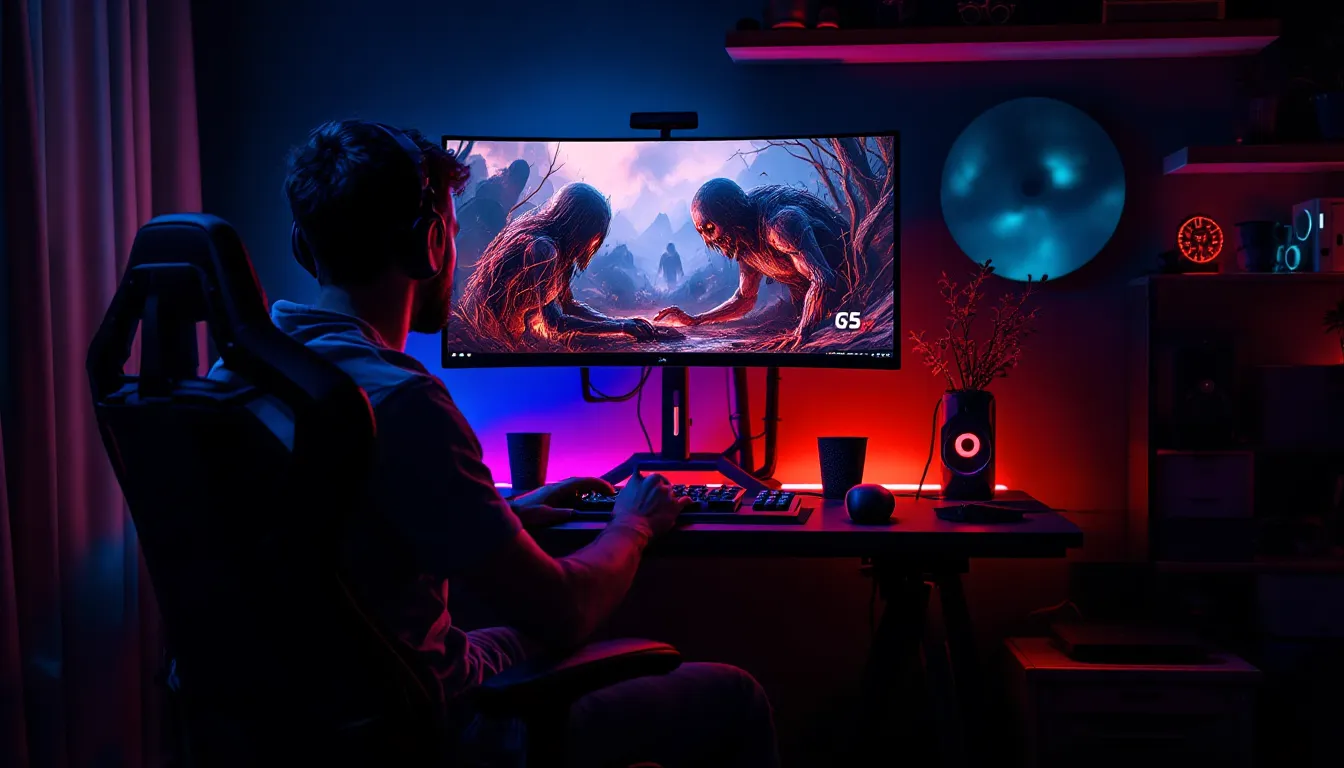
Sound design carries massive weight in horror games, sometimes more than visuals. Invest in decent headphones: cheap earbuds dilute the entire experience. Games like Amnesia: The Dark Descent and Outlast rely on spatial audio cues, and you’ll miss subtle scares with poor sound. If possible, use a surround sound setup or headphones with good stereo separation. Equally important: lighting. Play horror games in darkness or with minimal ambient light. Your pupils dilate, you become more sensitive to visual changes, and the screen feels more immersive. Some players cover their monitor’s bottom bezel to reduce peripheral distractions. Don’t play horror games with constant notifications from Discord, Twitch chat, or other apps. Set your phone across the room. Mute your phone entirely. The goal is complete sensory isolation with the game. Recent reviews on Rock Paper Shotgun frequently mention how environmental setup affects horror perception, with experienced players reporting that “the same game feels twice as scary with proper sound.”
Play with Friends or Solo
Multiplayer horrors like Devour, Phasmophobia, and Back 4 Blood thrive on shared panic. Coordinating while terrified creates hilarious and genuine bonding moments. Screaming together over voice chat is cathartic. Solo play, meanwhile, offers maximum immersion and dread since you can’t rely on teammates. Games like Resident Evil 7, Dead Space, and SOMA feel more oppressive alone because you’re genuinely isolated. Some games support both (The Forest, Grounded), giving flexibility based on your mood. Don’t feel obligated to match others’ preferences, if you prefer solo horror, that’s valid. If you’re a social player, the co-op titles will deliver more enjoyment than grinding through atmospheric single-player experiences alone. Consider rotating: play intense co-op horror on weekends with friends, then experience atmospheric single-player titles during weeknight gaming sessions when you want to decompress and focus.
Conclusion
Steam’s horror catalog has evolved beyond cheap jump-scare simulators into genuinely accomplished experiences that rival AAA production values. Whether you’re hunting survival horror classics like Resident Evil 7 and Dead Space, exploring psychological nightmares in Outlast and SOMA, or diving into innovative indie experiences like Phasmophobia and Grounded, there’s something designed specifically for your scare threshold and playstyle.
The best approach? Start with whichever section resonates with your preferences. If you love combat and firepower, jump straight to the action-packed games. If you want pure helpless dread, Amnesia and Outlast are calling. If you’ve got a gaming group, co-op titles like The Forest and Devour create memories that stick long after credits roll. Don’t worry about playing “through” all these games, horror is subjective, and what terrifies one player might feel tame to another. Pick what sounds genuinely interesting, commit to full immersion with good audio and darkness, and let yourself actually feel scared. That’s the whole point.