
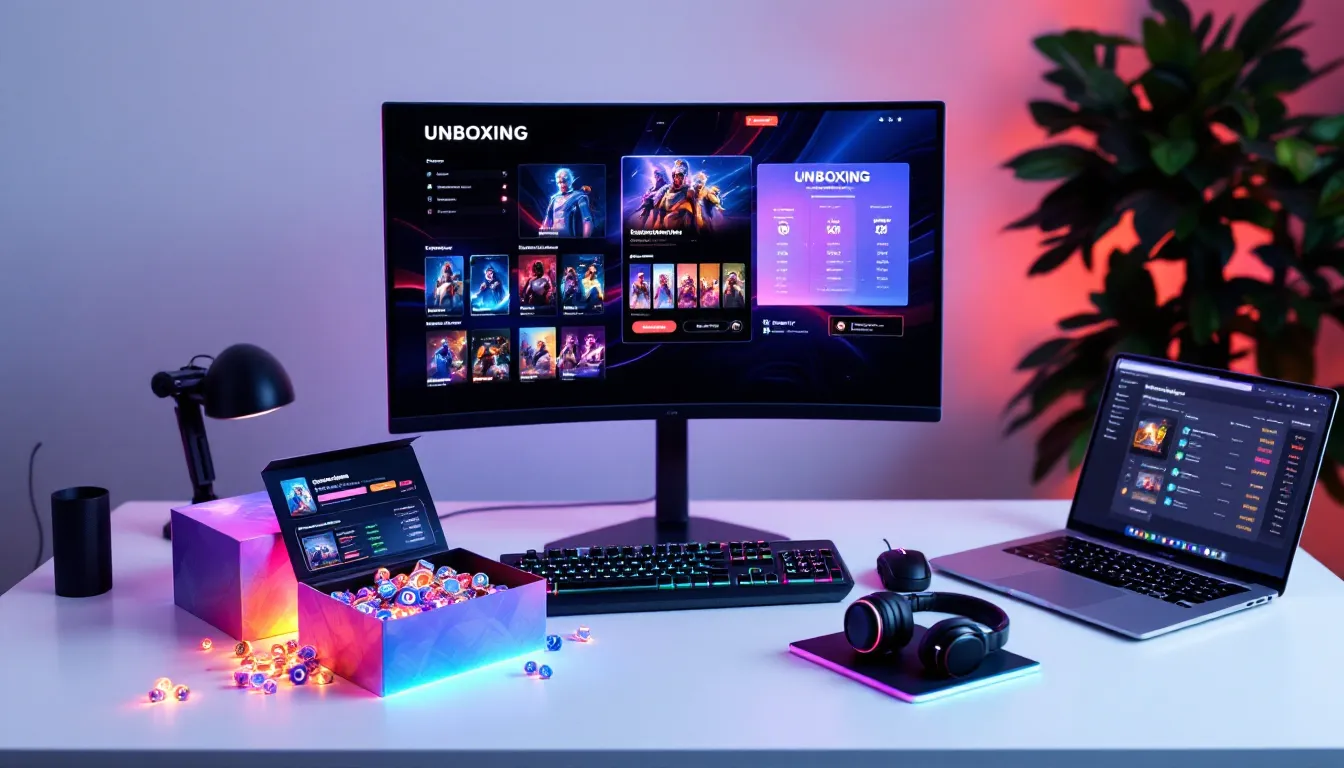

Mystery boxes have become a staple in gaming culture, promising that rush of excitement when you don’t know exactly what’s inside. Whether it’s a sealed crate with rare cosmetics, a physical collectible from your favorite franchise, or a retro gaming treasure hunt, gaming mystery boxes tap into something primal, that gambling-like dopamine hit combined with the thrill of discovery. But here’s the thing: not all mystery boxes are created equal, and some are outright scams designed to separate gamers from their cash. By 2026, the mystery box market has exploded across platforms, from major retailers to indie creators, making it crucial to understand how these work, where the real value lies, and which ones are actually worth your money. This guide cuts through the hype and gives you the intel you need to make informed purchases.
Key Takeaways
- Gaming mystery boxes are designed to profit from most players receiving items worth less than the purchase price, making them a mathematically losing proposition for the average buyer.
- Reputable retailers like Best Buy, GameStop, and official game stores offer safer gaming mystery box purchases with buyer protection and clear return policies compared to unverified sellers.
- Calculate real value by checking secondary market prices rather than manufacturer’s suggested retail price (MSRP), as perceived value in gaming mystery boxes often inflates the actual demand-based worth of items.
- Watch for red flags including unrealistic value claims, no odds disclosure, pressure to buy multiple boxes, and payment methods that cannot be reversed like Bitcoin or wire transfers.
- Mystery boxes profit on variable reward schedules and psychological biases like FOMO and sunk cost fallacy, so set a strict budget and treat purchases as entertainment spending rather than investments.
- By 2026, regulatory pressure is pushing transparency improvements such as published drop rates and tiered guaranteed systems, making the gaming mystery box market safer but less profitable for sellers relying on opacity.
What Are Gaming Mystery Boxes?
How They Work and What Makes Them Popular
A gaming mystery box is straightforward in concept: you pay a set price for a sealed container or digital bundle without knowing the exact contents. The appeal lies in the uncertainty. You’re buying based on estimated retail value ranges, brand reputation, or category promises (like “guaranteed rare items”), but the actual contents remain a mystery until opening.
The mechanics vary wildly depending on the type. Some mystery boxes use algorithmic randomization to determine contents from a specific pool, think loot boxes in live-service games, while others rely on physical packing by staff. The most transparent operations publish odds publicly or provide content tiers (e.g., “Legendary box guaranteed to include one item worth $50+”). Others… don’t.
What makes them so popular? First, there’s the novelty factor. Unboxing videos generate millions of views on YouTube and Twitch, and that spectacle drives cultural momentum. Second, mystery boxes can offer genuine value if you’re lucky, getting a rare cosmetic or vintage game for significantly less than market price hits different. Third, they tap into the collector mentality. Gamers love completionism, and mystery boxes offer a fast-track feeling (even if it’s mostly psychological). Finally, limited availability creates artificial scarcity. If a mystery box drops for 48 hours only, the FOMO (fear of missing out) is real.
But here’s where skepticism kicks in: the house always has an edge. Companies profit because they’re banking on most people receiving items worth less than they paid, offset by the few who hit the jackpot. It’s a business model, not charity.
Types of Gaming Mystery Boxes
Physical Gaming Collectibles and Hardware
Physical mystery boxes are the bread and butter of the premium segment. These typically include sealed games, action figures, apparel, or gaming hardware like limited-edition controllers or headsets. Retailers like Best Buy, specialty shops, and licensed resellers stock these, especially around major releases or holidays.
The value proposition here is clearer because you can verify authenticity and condition. But, pricing can be inflated. A $60 mystery box might contain a $40 game and $20 worth of branded merch, not a terrible deal, but not the 2x-value win you were hoping for either.
Hardware boxes are riskier. If you’re expecting a next-gen console and get a discounted controller instead, that’s a hard lesson in reading the fine print.
Digital In-Game Items and Cosmetics
This is where the real money flows in 2026. Digital mystery boxes in live-service games (Valorant, Fortnite, Apex Legends, Call of Duty Warzone) let players spend $10–$50+ for randomized cosmetics, weapon skins, or battle pass equivalents.
The appeal is instant gratification, no shipping, no wait. The catch? Digital items have zero resale value in most games, and they don’t exist outside the game’s ecosystem. You’re paying for a visual layer on your character or gun, nothing more. That said, exclusive skins can carry social status within communities, which drives demand.
Odds disclosure varies. Some games publish exact drop rates (thanks to regulatory pressure): others are vague. Always check the item shop or in-game odds menu before pulling the trigger.
Retro Gaming and Nostalgia Boxes
Retro gaming mystery boxes are aimed at collectors hunting for NES, SNES, Dreamcast, or Game Boy games and accessories. Nostalgia is a powerful motivator, and sellers know it.
These boxes sometimes deliver genuine finds, a sealed copy of Chrono Trigger or an original Game Boy bundled with games could legitimately exceed the $100–$200 asking price. But other times, you get ROM cart reproductions, common titles, or “new in box” items that are actually repackaged knockoffs.
Before buying retro boxes, research the seller’s ratings, ask for photos of sample contents, and verify authenticity claims. Retro gaming is an authentication nightmare, and mystery boxes make it worse.
Game Development and Creator Signature Boxes
Independent developers and content creators now offer branded mystery boxes tied to their games or channels. These might include exclusive merch, early access to games, signed items, or behind-the-scenes content.
Value here is inherently subjective, it depends entirely on how much you value the creator. A signed poster from your favorite indie dev might be priceless to you, worthless to someone else. Transparency matters more here because you’re often buying directly from the creator, and they have reputational incentive to deliver quality.
These boxes are lower-volume, more personal, and generally safer than mass-market offerings. The trade-off: you might pay a premium for that exclusivity.
The Value Proposition: What You’re Really Getting
Calculating Real vs. Perceived Value
Here’s where the math gets uncomfortable for mystery box enthusiasts. When a seller claims a $50 mystery box contains items “worth up to $150,” that’s usually based on MSRP (manufacturer’s suggested retail price), not market value.
Example: A cosmetic normally priced at $20 in the in-game shop is listed at $20 “value.” But it never sells at that price because the shop is the only source, supply is controlled. In a mystery box, the perceived value inflates, but the actual demand-based value is zero dollars. You can’t trade it, sell it, or use it anywhere else.
Calculate real value like this:
- List the actual items you’re guaranteed or likely to receive
- Check secondary market prices (eBay, trading communities, etc.) for physical items
- Subtract retail markups (30–50% of MSRP is typical markup)
- Compare to the mystery box price
If a $40 box lands you three items worth $12, $8, and $5 at market rates, you paid $40 for $25 of actual value. That’s a loss, full stop.
The key insight: mystery boxes profit because most buyers lose. The distribution is weighted so that average value received is below the asking price, with a tail of lucky winners who break even or profit. It’s a lottery, and lotteries are mathematically designed against the player.
The Psychology Behind the Mystery Appeal
Knowing the math doesn’t stop people from buying mystery boxes, and that’s the psychology bit. Several cognitive biases fuel this market:
Variable Reward Schedules: The brain releases dopamine not at reward, but at the possibility of reward. This is why slot machines work, why loot boxes are addictive, and why mystery boxes sell. The uncertainty itself is the product.
Sunk Cost Fallacy: Once you’ve spent $50, you’re more likely to spend another $50 chasing that big hit, even if the math says you should stop. You’ve invested in the hope already.
Social Proof and FOMO: Seeing others unbox rare items triggers fear of missing out. Unboxing content is specifically designed to showcase the best pulls, not the statistical norm. You’re seeing survivorship bias, only the exciting outcomes get uploaded to YouTube.
Gamification: Mystery boxes feel like a game mechanic (they are), and gamers love optimizing and chasing progression. Collecting all variants or hitting a specific pull tier feels like achievement, even if it’s entirely random.
Understanding these patterns doesn’t make you immune, it just makes you aware you’re being influenced. That awareness matters when deciding whether a $40 purchase is worth the rush.
Where to Buy Gaming Mystery Boxes Safely
Reputable Retailers and Platforms
Not all mystery box sellers are legitimate. Start with established retailers: Best Buy, GameStop, Amazon, and Target all carry curated mystery boxes with return policies and buyer protection. The markup is real, but so is the recourse if something goes wrong.
For digital mystery boxes, buy directly through the official game client or verified storefronts. Steam, Epic Games Store, PlayStation Network, Xbox Game Pass, and console digital stores guarantee authenticity and transaction security.
For indie creator boxes, check if they’re selling through legitimate platforms like Teespring (now Spring), Etsy (with good reviews), or their official website with clear payment processors (Stripe, PayPal). These platforms offer some buyer protection.
Before committing, verify:
- Seller ratings and history (at least 4.5+ stars with 50+ reviews)
- Return policy (legitimate sellers allow returns within 30 days)
- Transparency on contents (odds, guaranteed minimum values, photos of sample boxes)
- Contact information (real customer service, not just an email form)
- Payment security (https, SSL certificate, trusted payment gateways)
Cross-reference reviews on Trustpilot, Reddit (check subreddits like r/loot or r/mystery_boxes), and Discord communities. If hundreds of people got scammed, you’ll hear about it.
Red Flags and Scams to Avoid
Scammers prey on the mystery box market because it’s loosely regulated and high-margin. Watch out for:
Unverified Dropshipping Sites: New websites claiming to sell exclusive mystery boxes with zero online history. They take payment, never ship, or ship counterfeit items.
Unrealistic Value Claims: “$100 mystery box contains $500+ value.” This is a red flag. Sellers with sustainable businesses don’t inflate claims by 5x.
No Odds Disclosure: Legitimate sellers in regulated markets (especially for digital items) publish odds. If a seller won’t or can’t provide this, walk away.
Pressure to Buy Multiple Boxes: “Buy three and get a guaranteed rare.” is a tactic to lock in revenue before you realize you got common items. Each box should stand alone on value.
No Return Policy or Sketchy Terms: If returns aren’t allowed or are “only for damaged items” (conveniently hard to prove for digital goods), that’s intentional. Scammers want finality.
Fake Unboxing Videos and Testimonials: Sellers sometimes create fake hype by posting doctored unboxing videos or bot-generated reviews. Cross-reference claims on independent channels.
Payment Methods That Can’t Be Reversed: Bitcoin, wire transfers, gift cards, scammers push these because they’re irreversible. Use credit cards or PayPal if possible: you’ll have chargeback protection.
Excessive Personal Information Requests: Legitimate retailers need shipping address and payment details, nothing more. If you’re asked for SSN, ID scans, or bank account info for a mystery box, that’s fraud prep.
If something feels off, it probably is. Scammers are counting on FOMO and impulse. Give yourself 24 hours to verify before buying.
Tips for Maximizing Your Mystery Box Experience
Research Before You Buy
Don’t be the person who drops $100 on a mystery box without assignments. Spend 15 minutes researching:
1. Sample Contents: Ask the seller for photos of three to five past unopened boxes and their actual contents. Legitimate sellers have nothing to hide. If they won’t provide this, skip them.
2. Unboxing Videos from Neutral Sources: Search YouTube for the specific box you’re considering. But here’s the key, watch videos from random people with smaller audiences, not mega-channels that get free boxes (they have incentive to hype). Look at the comments: real customers will call out if they got scammed.
3. Community Feedback: Check Reddit, Discord servers for the game or collector community, or Game Informer forums. People love to complain about bad value, and that data is gold.
4. Return Policy Deep Dive: Don’t just see that returns are allowed. Read the exact terms. 30 days? Unopened items only? Restocking fee? Some sellers technically allow returns but make it painful (requiring return shipping you pay for, lengthy approval processes).
5. Odds Math: If odds are published, do the math yourself. If a “Legendary” item drops at 2% and is worth $40, and “Rare” items drop at 10% and are worth $10, and everything else is $2 filler, your expected value is (0.02 × 40) + (0.10 × 10) + (0.88 × 2) = $2.76. Now compare that to the box price. If it’s $20, you’re paying 7x the expected value. That’s a whale tax.
6. Creator Track Record: For indie creator boxes, look at their history. New creators or accounts with a sudden explosion of mystery box sales are higher risk. Established creators with years of community trust are safer bets.
Setting a Budget and Managing Expectations
Treat mystery boxes like any gambling activity: set a hard budget you can afford to lose, and stick to it.
Budget Strategy: Decide upfront how much you’re willing to spend total on mystery boxes this month or year. Once that’s gone, stop. Don’t rationalize “just one more” to chase losses.
Expectation Management: Assume you’ll receive items at or below the guaranteed minimum value. If you get lucky and pull something rare, that’s a bonus, not the baseline. Going in expecting the best-case outcome sets you up for disappointment.
Frequency Limits: Space out purchases. Buying weekly trains your brain to expect that dopamine hit and increases addiction risk. Monthly or quarterly is healthier.
Diversify Your Spending: Don’t put all your gaming budget into mystery boxes. Balance it with direct purchases (where you know exactly what you’re getting), full games, or battle passes with guaranteed value.
Document Your Pulls: Keep a spreadsheet of what you’ve bought, what you received, and the actual value. After 10 boxes, calculate your ROI. Most people will see they’ve lost 20–40%. That cold number is a reality check.
Know Your Triggers: If you’re buying mystery boxes when stressed, sad, or bored, that’s self-medication disguised as gaming. Take a break.
The math says mystery boxes are a losing game for most players. The experience is what you’re paying for, the anticipation, the unboxing, the dopamine. If that’s worth the price difference to you, go in with eyes open. Just don’t fool yourself into thinking it’s an investment or a good deal.
Mystery Boxes vs. Traditional Gaming Purchases
When Mystery Boxes Make Sense
Mystery boxes aren’t always a waste. There are legitimate scenarios where they outperform traditional purchases:
You Have Disposable Income and Are Buying for Fun: If a $30 mystery box is pocket change and you’re in it purely for the experience (not the expected value), go ahead. Framing it as entertainment, not investment, makes the downside acceptable.
The Minimum Guaranteed Value Actually Represents Good Value: Some boxes guarantee items with clear retail prices. If a “Collectibles Mystery Box” guarantees a game, action figure, and poster worth $50+ combined, and you’re paying $45, the math works. Check Metacritic reviews of the source retailer to confirm.
It’s Creator-Signed or Exclusive Merch: Limited-edition boxes tied to a creator you love, signed by them, or containing items not sold anywhere else, have non-monetary value. That exclusivity and personal connection justify a premium if you’re a true fan.
Charity or Community Event: Some mystery boxes are charity fundraisers where profit goes to a good cause. The premium you pay is partly donation. That’s a valid reason to buy.
You’re Trying Out a New Game or Genre: Some publishers bundle mystery boxes with game keys or early access. If you’re already interested in the game, the mystery aspect is secondary, you’re getting a discount entry point.
Better Alternatives for Value Hunters
If you’re primarily after gaming items and want to optimize for value, mystery boxes are rarely the answer. Here are smarter plays:
1. Direct Purchases with Sales: Wait for seasonal sales (Summer Sale on Steam, Black Friday, holiday drops). Games and cosmetics get 30–70% off. You know exactly what you’re getting, and the price is better than mystery box expected value.
2. Bundle Deals: Publishers offer bundles (e.g., “Game + Season Pass + Cosmetics Bundle”) at steeper discounts than buying separately. No mystery, better value.
3. Battle Pass Over Loot Boxes: If a game’s cosmetics appeal to you, buying the battle pass (if available) usually gives you 50+ cosmetics for $10 and guarantees specific items. Loot boxes are random: battle passes are transparent.
4. Game Pass Subscriptions: Services like Xbox Game Pass or PlayStation Plus give access to hundreds of games for $10–$17/month. Over a year, that’s better value than 12 mystery boxes costing $40 each.
5. Secondary Markets and Resale Platforms: Sites like StockX or eBay let you buy specific items gamers are reselling. No mystery, market-rate pricing, and you avoid the FOMO tax.
6. Trading Communities: In competitive games like Valorant or CS:GO, players trade cosmetics directly. No middleman, no random chance. Join a Discord community and negotiate fair swaps.
7. Seasonal Events and Free Cosmetics: Many live-service games offer free cosmetics through seasonal events, battle passes, or missions. Patience beats impulse every time.
Game Informer regularly covers which games offer the best free cosmetics, making it worth checking before spending.
8. Collector Clubs and Subscriptions: Some publishers offer monthly collector boxes (Nintendo, PlayStation) where you know the contents in advance. Premium, but transparent.
The Bottom Line: Mysterious boxes optimize for engagement and revenue, not player value. If you want to maximize your dollar, traditional purchases, bundles, and subscriptions win. Mystery boxes win only if you value the experience of mystery and volatility itself.
The Future of Gaming Mystery Boxes
Emerging Trends and Innovations
By 2026, the mystery box market is evolving, and some trends are worth watching:
Transparency Pressure: Regulators and platforms are pushing for published odds and clear value disclosure. Games like Valorant now display drop rates directly in the shop. This isn’t because companies suddenly got ethical, it’s because loot boxes face bans in some regions (Belgium, Netherlands) due to gambling regulation. Expect more games to follow suit.
Tiered/Guaranteed Systems: Instead of pure RNG, newer mystery boxes offer tiers. Buy a “Platinum” box and you’re guaranteed one of 10 possible items (all listed), with a small chance at a bonus. It’s still gambling-adjacent, but it feels fairer and gives buyers a floor on value.
Creator Collaborations: Brands are partnering indie creators and streamers on exclusive mystery box drops. This drives community engagement and gives boxes a personal connection that pure randomization doesn’t. Pocket Tactics covers trends like this in mobile gaming, where creator collaborations are exploding.
Blockchain and NFTs (Cautiously): Some gaming projects are experimenting with blockchain-backed mystery boxes where items have verifiable ownership and resale potential. This is controversial and hype-heavy right now, but if executed well (with real utility, not just speculative value), it could fundamentally change the resale dynamics. Most gamers are skeptical, rightfully so.
Hybrid Physical-Digital: Brands are bundling physical items with digital codes or exclusive unlocks. A $50 box ships a figure + exclusive in-game skin. This bridges the worlds and justifies premium pricing by adding dual value.
Battle Pass Evolution: Rather than mystery boxes, publishers are moving toward battle passes with earned cosmetics and guaranteed content. This is better for player psychology and player retention. Mystery boxes haven’t disappeared, but the industry is quietly preferring the battle pass model.
Regulatory Changes and Transparency Shifts
The regulatory landscape is tightening. Here’s what’s happening:
Odds Disclosure Laws: The EU and some US states are pushing legislation that requires games to publish exact drop rates for loot boxes. This is already law in some places and trending globally. Expect your mystery box odds to be public by 2027.
Age Restrictions: Some regions are treating loot boxes and mystery boxes as gambling and restricting them for minors. Platforms may carry out age gates or warnings similar to gambling disclaimers.
Scam Crackdowns: Platforms like Twitch and YouTube are increasingly demonetizing content that promotes unregulated mystery box sellers or overhypes drops. This will reduce the viral promotion that fuels the market.
Verification and Authenticity Requirements: Governments are pushing retailers to verify that physical collectibles in mystery boxes match their claimed authenticity (official, licensed, not counterfeit). This raises the barrier for low-effort scammers.
Consumer Protection: Credit card companies and platforms like PayPal are reversing more mystery box charges if items don’t match descriptions. This puts financial pressure on sellers to be honest.
What This Means for You: Mystery boxes will likely become more transparent, less profitable for sellers, and harder to run as scams. The “wild west” phase of mystery boxes (2020–2024) is ending. By 2028, expect regulatory standards similar to gambling industries, which actually makes buying safer if you choose to participate.
The market will consolidate. Legitimate retailers with established brands will dominate, and fly-by-night scammers will get squeezed out. That’s good for consumers: it’s bad for sellers counting on opacity.
Conclusion
Gaming mystery boxes are here to stay, but understanding them separates savvy buyers from marks. The core truth remains: mystery boxes are designed to profit because they’re priced so most players lose value. That’s the business model. The experience, the anticipation, the unboxing, the dopamine hit, is what you’re actually paying for, and that has real (non-monetary) value if you’re honest about it.
If you decide to buy, research the seller ruthlessly, calculate expected value using published odds, set a strict budget, and treat it as entertainment spending, not an investment. Avoid unknown platforms, unverified dropshippers, and sellers with zero community feedback. The reputable retailers (Best Buy, Amazon, official game stores) are boring but safe. Use secondary markets and direct purchases as your default for getting specific items, they’ll almost always outperform mystery boxes mathematically.
As the market matures and regulations tighten, transparency will increase and scams will decrease. That’s good news for the honest players. Until then, trust the data, not the hype, and keep your wallet in check. The mystery box will be there tomorrow if you’re still interested, and one more day of consideration rarely results in missing out on a truly valuable deal.