
If you’ve scrolled through gaming forums or watched esports streams lately, you’ve probably heard the term “Cronus” thrown around, sometimes with praise, sometimes with skepticism. But what is Cronus in gaming, exactly? Unlike a random zen moment mid-raid, Cronus isn’t about mindfulness. It’s about control. Literally. Cronus controllers represent a category of advanced gaming devices that promise to bridge the gap between console limitations and competitive performance. Whether you’re a casual player curious about the hype or someone serious about competitive play, understanding what Cronus offers, and what it doesn’t, matters. This guide breaks down everything you need to know about these controllers in 2026, including how they work, their real-world impact, and whether they’re worth the investment for your gaming setup.
Key Takeaways
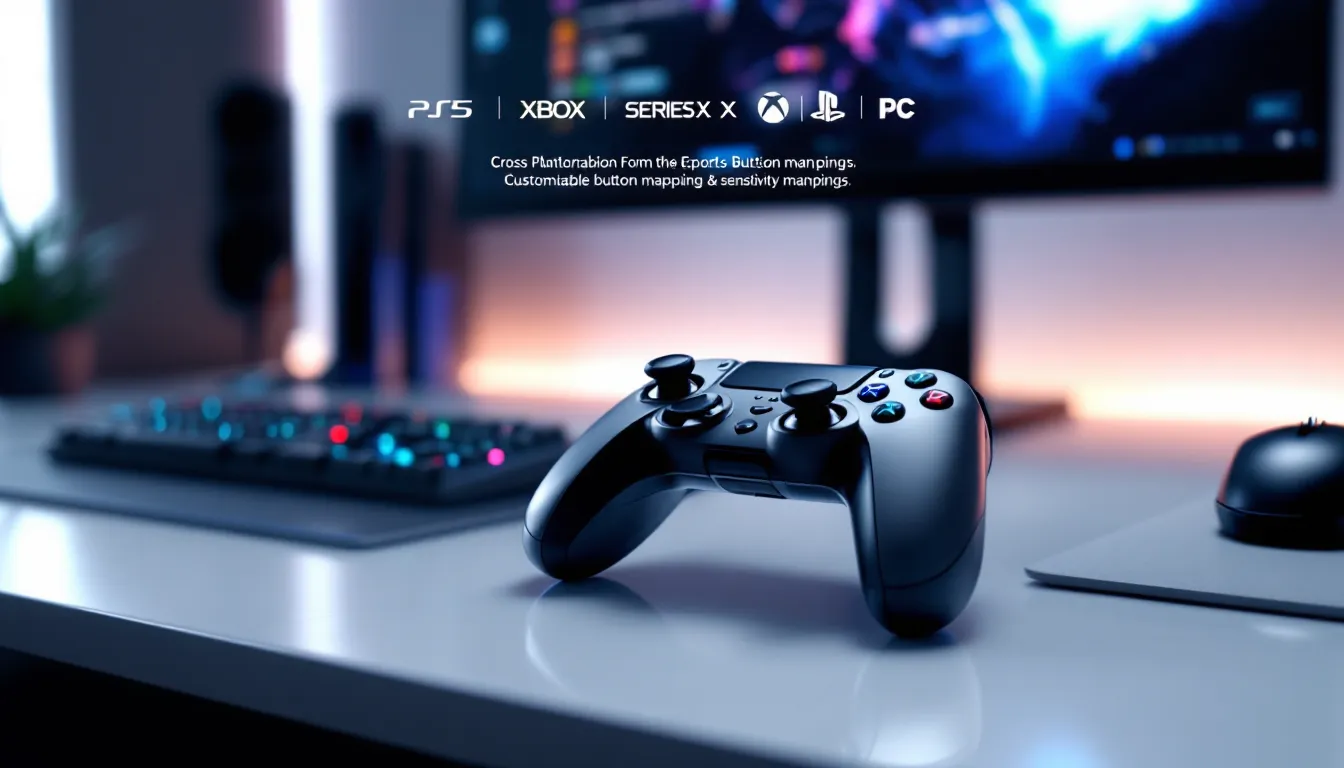
- Cronus controllers are third-party programmable devices that enable button remapping, sensitivity adjustments, and cross-platform compatibility across PS5, Xbox, and PC without needing multiple controllers.
- Cronus devices are tournament-approved and legal in competitive esports titles like Call of Duty, Valorant, and Rainbow Six Siege because they translate inputs without automating gameplay or providing unfair advantages.
- Advanced customization features including motion controls, haptic feedback, dead zone adjustment, and game-specific profiles make Cronus particularly valuable for competitive players and gamers with accessibility needs.
- With proper maintenance and modular stick replacement options, Cronus controllers deliver 2-4 years of durability at a cost of approximately $50 per year, making them economical for serious competitive players.
- Cross-platform compatibility eliminates the need to switch controllers when moving between consoles or PC, streamlining workflows for esports organizations, streamers, and multi-platform gamers.
Understanding Cronus Gaming Controllers
What Makes Cronus Unique in the Market
Cronus controllers occupy a distinct space in the gaming peripheral ecosystem. They’re not official console controllers made by Sony, Microsoft, or Nintendo. Instead, they’re third-party devices engineered to offer flexibility, customization, and cross-platform functionality that standard controllers don’t provide out of the box. The fundamental appeal is control, not just grip comfort, but programmable button mapping, sensitivity adjustments, and compatibility across multiple gaming platforms simultaneously.
What sets Cronus apart from other third-party options is its focus on competitive gaming and accessibility. Unlike casual gaming mice or standard controllers, Cronus devices are built with the assumption that players want granular control over their input. This isn’t about getting an unfair advantage (a common misconception): it’s about tailoring your hardware to match your playstyle and physical needs.
The brand has cultivated a reputation among esports players, accessibility advocates, and hardcore enthusiasts who demand precision. When competitive players spend hundreds of dollars on mice and headsets, a Cronus controller becomes part of that investment in performance hardware.
Core Features and Functionality
At its core, what is Cronus in gaming comes down to three pillars: customization, compatibility, and responsiveness. The device acts as an intermediary between your input and your console or PC, allowing you to remap buttons, adjust stick sensitivity, and create profiles for different games.
The primary functionality revolves around programmable controls. You can reassign buttons, say, moving jump to a paddle instead of Y, without touching the game’s settings. This is particularly powerful in competitive titles like Call of Duty, where split-second reactions matter. Speaking of Call of Duty, Cronus Call of Duty setups have become common in competitive circuits because the controller allows players to fine-tune their sensitivity per game, per mode, or even per weapon class.
Another core feature is the ability to record and playback macros. While this sounds like it could enable automation (and so cheating), Cronus includes safeguards and tournament-approved configurations to prevent unfair play. The device supports motion controls, adaptive triggers on PlayStation 5, and haptic feedback, meaning it’s not stripping away modern features: it’s enhancing them.
Connection is handled through USB or wireless dongles, depending on the model. Most Cronus devices are modular, meaning you can use them with a standard controller shell or purchase branded ones. This flexibility appeals to players who already own controllers they love but want the programmability layer underneath.
How Cronus Controllers Work Across Platforms
Cross-Platform Compatibility
One of Cronus’s biggest selling points is something gamers have wanted for years: true cross-platform compatibility. A single Cronus device can work across PlayStation 4, PlayStation 5, Xbox One, Xbox Series X/S, and PC without needing to switch hardware or buy multiple controllers.
Here’s how it works in practice: you connect the Cronus to your device, whether that’s a console or a gaming PC, and the controller communicates directly with your gaming platform. The magic happens on the software side. Cronus software (updated regularly, with the 2026 version supporting the latest consoles and input standards) interprets your inputs and translates them into commands your platform understands.
This means a player can stream on PC, play competitive multiplayer on Xbox Series X, and then switch to PlayStation 5 for single-player games, all without physically swapping controllers. For esports organizations managing rosters across different platforms, or for content creators who play multiple games simultaneously, this is a game-changer.
It’s worth noting: not all Cronus features work identically on all platforms. For example, haptic feedback on PS5 works natively, but certain advanced motion features might be limited on older hardware. Cronus maintains a compatibility matrix on their website, and the community actively discusses which features shine on which platforms.
Connection Methods and Setup
Cronus controllers support multiple connection methods, adapting to whatever setup you’ve got. The most common approach is a USB connection for maximum stability and zero latency. You plug the Cronus into your PS5, Xbox, or PC, and within seconds, it’s recognized as a valid controller input.
Wireless connections are available through proprietary dongles (not Bluetooth, which would limit compatibility). This is intentional, Bluetooth has latency concerns that don’t work for competitive gaming. The 2.4GHz wireless connection used by most Cronus devices offers sub-millisecond response times, suitable for fast-paced titles.
Setup involves downloading the Cronus software suite. This is where customization happens. You create profiles, remap buttons, adjust dead zones (the amount of stick input before your character moves), and fine-tune sensitivity curves. The software is intuitive, you don’t need to be a programmer. Most players spend 15-30 minutes configuring their first profile, then save it to the device.
One practical detail: if you’re using a Cronus device with a standard PS5 or Xbox controller shell, the setup is seamless. If you’re attaching it to a third-party shell or using it in stand-alone mode, you might need to verify the firmware is current. Cronus releases firmware updates regularly, and keeping up-to-date ensures you’re getting the latest compatibility patches and feature improvements. The update process is done through the software, just plug in, launch the app, and hit update.
Key Features That Set Cronus Apart
Customization and Programmable Controls
Customization isn’t just a feature, it’s the entire philosophy behind Cronus. Every button can be reprogrammed. Every stick can be adjusted. If you want to create a profile where your left stick has a dead zone of 5% for precision aiming and your right stick has 15% for faster camera movement, you can do exactly that.
Programmable buttons go further. You can assign Dual Sense adaptive trigger effects to custom buttons, remap gyro aiming to specific buttons, or create “turbo” functions that rapidly repeat input (useful in certain PvE scenarios, though obviously disabled in competitive play). The software also allows button combos, pressing two buttons simultaneously triggers a third action. This is practical: in Valorant or Counter-Strike, you could theoretically set one button to “walk forward + lean left,” reducing the number of inputs needed.
What makes this legitimately useful versus “cheating” is the tournament-approved limitation. Major esports organizations using Cronus devices stick to standardized profiles that don’t exploit unintended mechanics. What is a zen in gaming is sometimes just the clarity that comes from having controls exactly where you need them. For players with disabilities, Cronus profiles can mean the difference between playable and unplayable.
Another customization angle is sensitivity profiles per game. You might play Valorant with 1.2 sensitivity, but Call of Duty with 8. Instead of manually adjusting in-game settings every time you switch, your Cronus device loads the right profile automatically. Some players create profiles for different game modes: ranked play might have one sensitivity, casual another.
Motion Control and Advanced Feedback Systems
Modern gaming demands modern input methods. PS5 and Xbox Series X
|
S controllers include motion controls and haptic feedback, those subtle vibrations that make a gun recoil feel real or rain feel like it’s hitting your hands. Cronus preserves these features while enhancing them.
Motion control on a Cronus device works just like on a native controller. Games that use gyro aiming (increasingly common in shooters) get full support. The Cronus software even lets you adjust motion sensitivity independently from stick sensitivity. A sniper in Valorant might use motion for fine adjustments while using stick input for gross movement, and Cronus lets you dial in exactly how sensitive that motion response is.
Haptic feedback on PS5 controllers is fully supported. When you’re firing a rifle in Destiny 2 or feeling the chainsaw kick in Gears tactics, the haptic response translates through the Cronus just as it would with a native DualSense. This isn’t a compromise: it’s feature parity.
One advanced feature less talked about: stick tension adjustment. Some Cronus models come with swappable stick modules of different tensions. A fight stick gamers might want stiffer sticks for precision fighting game inputs, while a racing sim player might want looser, more responsive sticks. The modular design means you’re not locked into one feel.
Adaptive triggers deserve special mention. PS5’s adaptive triggers simulate resistance, pulling a gun trigger actually feels harder, and the resistance changes based on in-game state. Cronus respects these proprietary features, meaning you’re not losing the sensory experience modern games are designed around. Your Cronus device communicates with your console to ensure haptic and adaptive feedback systems work as intended, not as a degraded substitute.
Gaming Performance and Real-World Applications
Competitive Gaming and Esports Use
Cronus controllers have become standard equipment in esports organizations. Why? Because they solve real problems in competitive gaming. The Cronus Call of Duty competitive scene is particularly well-established. Professional Call of Duty players often use Cronus setups configured with sensitivity curves optimized for multiplayer modes. A typical competitive CoD loadout might feature increased aim assist response, customized button layouts to keep thumbs on sticks during critical moments, and profiles that switch automatically based on game mode.
In esports tournaments, most Cronus use happens on closed networks where organizers can verify device firmware and profiles beforehand. Major tournaments (especially Call of Duty League events and controller-agnostic competitions) permit Cronus devices as long as they pass compliance checks. The device doesn’t automate inputs or provide aim assistance, it’s a control translator, not a cheat device.
Competitive advantage here isn’t unfair: it’s the same advantage a $300 gaming mouse provides over a standard office mouse. You’re optimizing input responsiveness and ergonomics. A professional Counter-Strike player might use a Cronus to maintain consistent sensitivity across ranked matches and tournaments, eliminating the micro-adjustments that create inconsistency.
DPS-intensive games (anything from raid shooters to rhythm games) benefit from Cronus customization. That zen moment when your button layout finally clicks? Cronus gets you there faster by letting you design the layout from scratch instead of compromising with standard configurations.
Response time matters in competitive environments, and Cronus devices achieve sub-5ms input lag over USB, competitive-grade responsiveness. For reference, quality gaming mice achieve similar specs, and Cronus brings that same precision to controller input.
Accessibility Features for All Players
Beyond esports, Cronus’s real impact might be in accessibility. Players with limited hand mobility, tremors, or other physical conditions can configure a Cronus device to match their capabilities. Button reassignment, dead zone customization, and sensitivity curves aren’t luxury features for this audience, they’re enabling features that make gaming possible.
A player with limited grip strength can reduce dead zones and increase sensitivity, meaning they don’t have to push the stick as far to achieve movement. Someone with hand tremors can increase dead zones to filter out involuntary inputs. A player with limited thumb dexterity can move critical buttons to paddles or other positions that match their range of motion.
Cronus’s official accessibility documentation is thorough and updated regularly. Community forums are filled with configuration threads where players help each other dial in settings for specific disabilities or conditions. This grassroots support, combined with official features, means Cronus has become a standard accessibility tool in gaming, alongside specialized controllers from companies like Xbox Adaptive Controller.
For content creators with repetitive stress injuries or long streaming sessions, Cronus profiles can reduce strain by optimizing button placement and sensitivity curves for comfort. The modular nature of some Cronus models, where you can adjust stick tension or swap button modules, extends this accessibility philosophy into the hardware itself.
The beauty of Cronus in this context is that it doesn’t require you to buy specialized hardware just for accessibility. A standard PS5 or Xbox controller can become accessibility-optimized through software alone, making Cronus a affordable solution for players in regions where specialized adaptive controllers are expensive or unavailable.
Comparing Cronus to Alternative Gaming Controllers
Official Console Controllers vs. Cronus
Let’s be direct: official controllers from Sony, Microsoft, and Nintendo are excellent. A standard DualSense or Xbox Series X controller is a refined piece of hardware with thoughtful design. They’re also limited. You can’t reprogram buttons without hacking the console. You can’t adjust dead zones without losing granularity. You can’t create game-specific sensitivity profiles.
Official controllers are locked to their ecosystem (mostly). A DualSense works on PS5 and some PCs, but it’s not seamless cross-platform. A Cronus device bridges that gap.
Price-wise, a standard DualSense costs $70-75. A Cronus device typically ranges from $100-200 depending on the model and whether you’re buying just the device or a complete shell-integrated package. That premium buys you programmability and cross-platform flexibility. For casual gamers playing single-player games, it’s probably not worth it. For anyone managing multiple platforms or serious about competitive play, it’s reasonable.
Durability is a consideration. Standard console controllers are consumer hardware, designed to last 2-3 years of heavy use before stick drift emerges. Some Cronus models offer modular stick replacements, extending lifespan. Other third-party controllers have similar durability to official ones. If you play competitively or stream 40+ hours per week, hardware longevity becomes a real cost factor.
Haptic feedback and adaptive triggers are official features on PS5 and Xbox Series X
|
S. Cronus preserves these, while official controllers can’t be reprogrammed to work differently. If you want haptic feedback with custom sensitivity, you need a Cronus device with that capability.
Third-Party Alternatives and Market Positioning
Cronus isn’t the only third-party controller option. Scuf controllers offer similar customization and esports appeal, with a focus on back paddles and button remapping. 8BitDo controllers provide retro aesthetics with modern features. PowerA offers budget-friendly licensed controllers for console play. Each occupies a different market position.
Scuf controllers are positioned as “esports-grade” and price similarly to Cronus (often higher, actually). They don’t offer the same cross-platform compatibility, a Scuf is typically designed for one platform. For PlayStation-only or Xbox-only players, Scuf might be the better choice. For flexibility, Cronus wins.
8BitDo specializes in wireless controllers with multiple connection profiles (Bluetooth, USB, proprietary). They’re excellent for retro gaming and emulation but don’t target the competitive market as directly. PowerA controllers are budget options, often costing $30-50, but lack the programmability of Cronus.
Cronus’s market position is unique: it’s the cross-platform programmer that works with existing hardware. You’re not locked into one brand or aesthetic. You’re buying the customization layer.
For esports specifically, Cronus has become the default because it’s platform-agnostic and tournament-approved across multiple game franchises. Call of Duty League, Valorant esports, and Rainbow Six Siege all permit Cronus devices in competitive play. That’s not luck, it’s because Cronus maintains compliance with anti-cheat and tournament standards better than competitors.
Worth noting: most alternatives don’t match Cronus’s documentation on compliance and tournament legality. The official Cronus website maintains updated tournament rules and approved configurations. This transparency builds trust with competitive organizations, which is why you see Cronus as the standard rather than alternatives.
Pricing, Availability, and Value for Money
Cronus controllers come in several tiers, each with different feature sets and price points. Entry-level models start around $100 for a basic programmable device. Mid-range options (around $150) add features like modular sticks or integrated shells. Premium models (up to $200+) offer the full feature set plus quality-of-life additions like tournament-ready configurations and extended warranty.
Where you buy matters. Cronus devices are available directly from the manufacturer’s website, through major retailers like Amazon, and through specialized gaming peripheral shops. Prices fluctuate based on promotions and inventory. Holiday sales typically offer 10-20% discounts, and new model releases sometimes cause older inventory to drop in price.
Value calculation depends on your use case. If you’re a casual player enjoying story-driven games on one platform, a Cronus device probably isn’t worth it. A standard controller is cheaper and perfectly adequate. If you’re:
- Playing competitively across multiple games
- Managing multiple platforms (PS5 and PC, for example)
- Serious enough about your setup to invest $300+ in a gaming mouse
- Dealing with accessibility needs
- Streaming or content creating regularly
Then a Cronus device becomes a reasonable investment. You’re buying years of use and tournament-grade reliability. Many competitive players justify it the same way they justify $150 gaming mice or $200 headsets, performance hardware pays for itself in improved gameplay consistency.
One often-overlooked cost: software updates and support. Cronus devices receive regular firmware updates at no additional cost. The software suite is free to download and use. You’re not paying subscription fees or locked into recurring costs. This contrasts with some competitors who charge for advanced features or require premium memberships to access customization tools.
Resale value is reasonable. A Cronus device that’s 1-2 years old typically sells for 60-70% of original retail price, meaning the real cost of use is lower if you factor in eventual resale. Compare that to standard controllers, which hold value poorly once new models release.
Bottom line on value: Cronus devices cost more upfront but deliver cost-per-use advantages for serious players. For casual use, they’re not necessary. For competitive or multi-platform gaming, they’re competitive with other premium peripheral choices.
Common Questions About Cronus Gaming
Legality and Tournament Compliance
The biggest question everyone asks: Is using a Cronus device cheating? The answer is no, with context.
Cronus devices are legal in competitive play across major esports titles, including Call of Duty, Valorant, Rainbow Six Siege, and fighting games. The device doesn’t automate inputs or apply aimbots. It translates control inputs, nothing more. You still need to aim, move, and react just like any player.
Major esports organizations maintain explicit allowance for Cronus devices in their rulebooks. The Call of Duty League, for instance, permits Cronus controllers as long as they pass pre-tournament hardware checks and comply with firmware standards. Check the official rulebook for any game you’re competing in, you’ll usually find Cronus listed alongside other approved controllers.
Where legality gets murky is with macros. Some Cronus configurations allow button combos to execute complex sequences automatically. In some games, this violates anti-cheat policies. The official Cronus stance is clear: they provide tools, but players and organizations are responsible for compliance. Most competitive configurations (available free on the Cronus website) are pre-verified for tournament use.
In casual play, there’s zero legal or competitive concern. You’re modifying your own input hardware, something players have done for decades with mice and keyboard customization.
Where you need to be careful: check the tournament rules for your specific game and event. Don’t assume Cronus approval in one esport translates to another. Valorant’s rules are different from CS2’s, which differ from fighting game circuits. The Cronus community actively discusses compliance per game, and the Reddit communities for competitive plays are good resources for current rulings.
Durability and Long-Term Investment
How long do Cronus devices actually last? Real-world reports suggest 2-4 years of heavy use before wear becomes noticeable. Some components can fail earlier (stick modules wear like any joystick), while the core programmable hardware is quite durable.
This is where the modular design shines. Cronus offers replacement stick modules for $20-30, meaning you can extend device life by swapping worn sticks without replacing the entire device. Official console controllers don’t have this option, you buy a new controller once stick drift hits.
Warranty varies by retailer and model. The manufacturer typically offers 1-year warranties, with extended options available at purchase. Cronus has solid customer support: issues are usually resolved within a week through replacement or repair.
For the investment angle: a Cronus device used for 3 years of competitive play costs roughly $50/year, or less than $5/month. That’s actually economical compared to replacing worn-out controllers annually.
Long-term reliability concerns are mostly historical, older 2020-2022 models had occasional firmware compatibility issues when new console generations launched. The 2024-2026 models address these through regular software updates. As long as you keep firmware current (takes 5 minutes, done through the software), compatibility remains solid.
One practical durability tip: wireless Cronus devices are slightly more prone to connectivity issues than USB-connected ones. If you’re concerned about reliability during tournaments, USB connection is the safe choice. For casual home use, wireless is convenient and reliable enough.
Bottle line on durability: treat a Cronus like you’d treat a quality gaming mouse. With normal use and occasional maintenance (stick module replacement every 2-3 years if needed), you’ll get solid longevity. Heavy esports players might cycle through 2-3 over a career, and that’s comparable to how many mechanical keyboards they’d go through.
Conclusion
So what is Cronus in gaming, really? It’s a bridge between your hardware and your playstyle. It’s the tool that lets a player on PS5 practice before switching to PC for ranked play. It’s the customization layer that transforms a standard controller into precision competitive hardware. It’s accessibility technology disguised as a gaming peripheral.
For esports organizations and competitive players, Cronus has become the standard because it delivers measurable benefits: consistent sensitivity across platforms, tournament-approved configurations, and feature parity with native controllers plus customization. For casual players, it’s probably overkill. For streamers, content creators, and accessibility-focused gamers, it’s genuinely useful.
The 2026 peripheral market is diverse. There’s no “best” controller for everyone. But if you’re serious about your setup, frustrated by platform-switching limitations, or looking to optimize input for competitive play, a Cronus device deserves consideration. Articles on GameRant and guides on Twinfinite regularly cover competitive controller setups if you want deeper dives into specific game recommendations.
The real shift happening in gaming is acceptance that one-size-fits-all hardware isn’t enough anymore. Cronus represents that shift: hardware customization, not as a luxury, but as a serious option for serious players. Whether that’s your gaming direction is entirely up to your needs and budget, but now you know what the option actually is.